Discover the Icons — Devrent Valley, Göreme Open-Air Museum, Avanos & Panoramic Views
The Cappadocia North Tour follows the classic northern circuit through the heart of the region — the route that made Cappadocia famous. You walk through the wind-sculpted formations of Devrent Valley, stand inside thousand-year-old frescoed churches at the Göreme Open-Air Museum, shape clay on a potter’s wheel in Avanos, and take in the full sweep of the volcanic landscape from one of the region’s finest panoramic viewpoints. A licensed English-speaking guide accompanies you throughout, and lunch is included at a traditional restaurant.
This is the foundational Cappadocia experience. The northern valleys contain the densest concentration of fairy chimneys, the most significant Byzantine monastic site in Turkey, and the living craft traditions that connect today’s Cappadocia to its ancient roots. Whether you are spending one day or five in the region, the Cappadocia North Tour belongs on your itinerary first — everything else you see will make more sense after this introduction.
Full Itinerary: What You Will See on the Cappadocia North Tour
Devrent Valley — Nature’s Stone Gallery
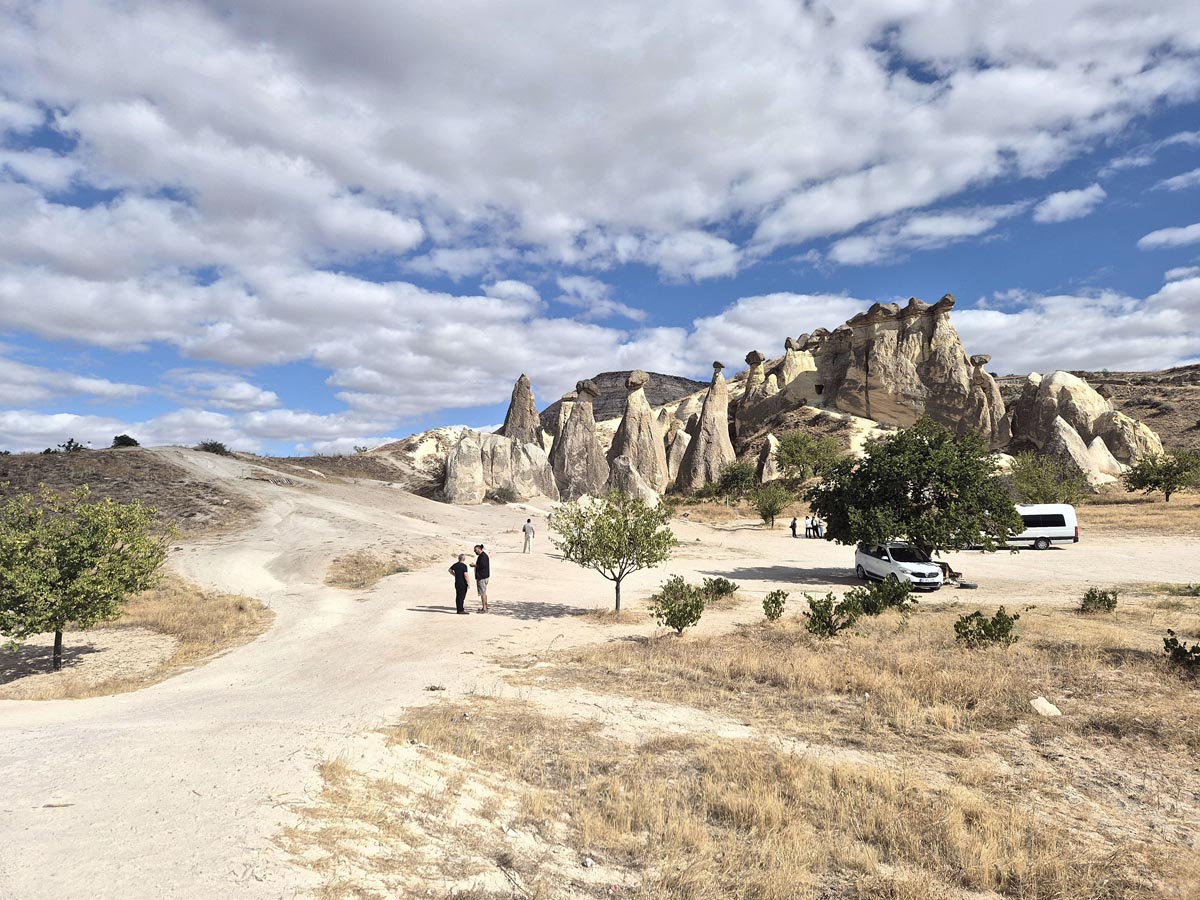
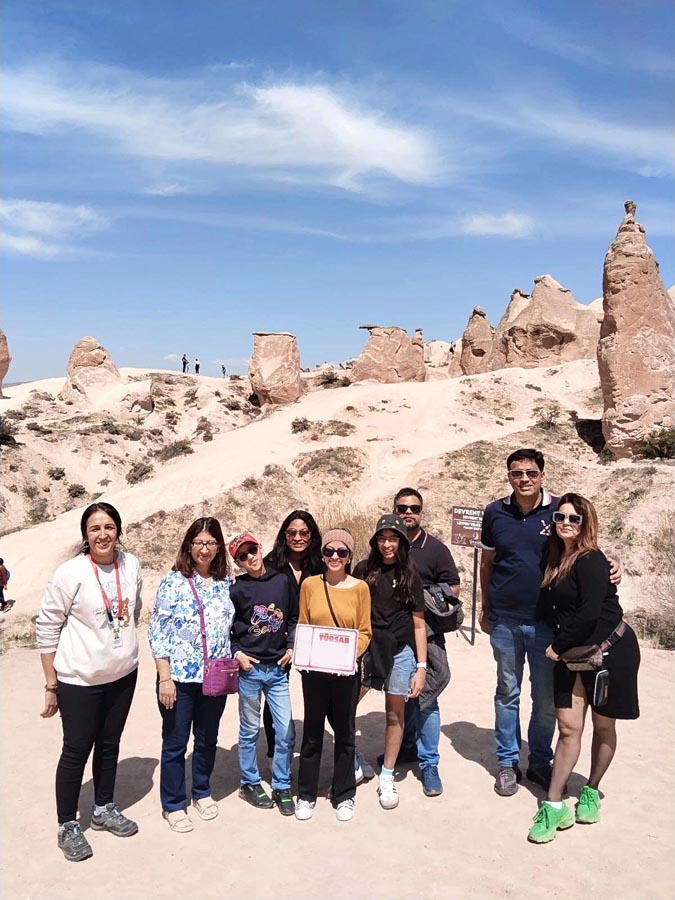
Your day begins in Devrent Valley, a landscape so unusual that first-time visitors often stop mid-sentence. The formations here were never carved or inhabited — every shape you see is the result of differential erosion working on volcanic deposits over roughly ten million years. Softer layers of tuff dissolved faster than harder mineral inclusions, leaving behind pillars, arches, and balanced rocks that resemble living creatures. A stone camel stands with remarkable anatomical accuracy near the roadside. Nearby, formations suggest seals, dolphins, penguins, and figures that shift depending on where you stand.
Your guide uses Devrent as a geology classroom. The valley sits on the same volcanic tuff deposit that underlies all of Cappadocia — material ejected by the eruptions of Mount Erciyes and Mount Hasan between 10 and 3 million years ago. Understanding what happened here explains everything you will see for the rest of the day: why the rock is soft enough to carve, why chimneys form caps, and why entire communities chose to live inside stone rather than building on top of it.
Pasabag — Fairy Chimneys of the Monks
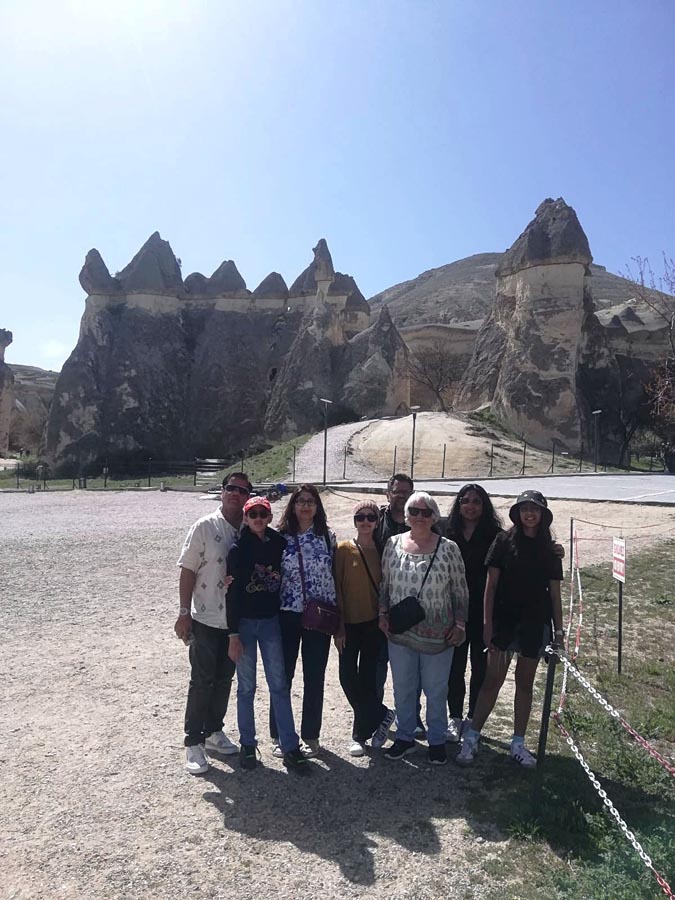
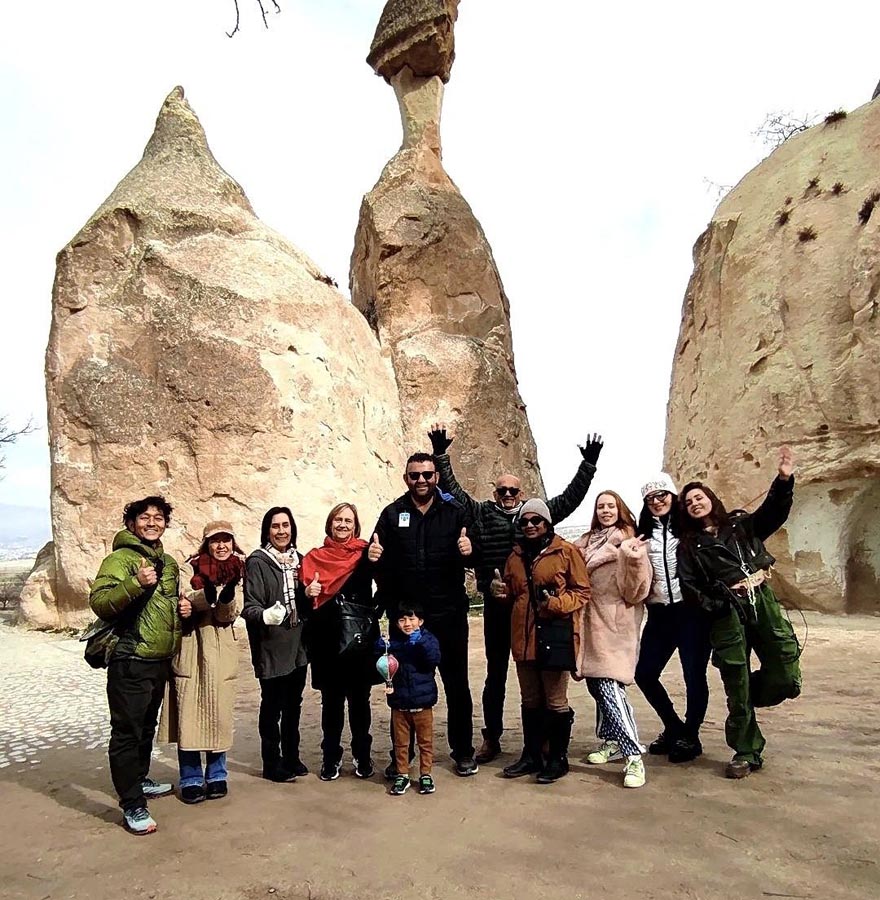
The second stop brings you to Pasabag, where the fairy chimneys reach their most refined expression. These formations follow a clear structural logic: a column of pale, porous tuff protected by a harder capstone of dark basalt or andesite. As the surrounding rock erodes away, the capped column remains standing — a geological mushroom that can persist for thousands of years until the cap eventually cracks and falls.
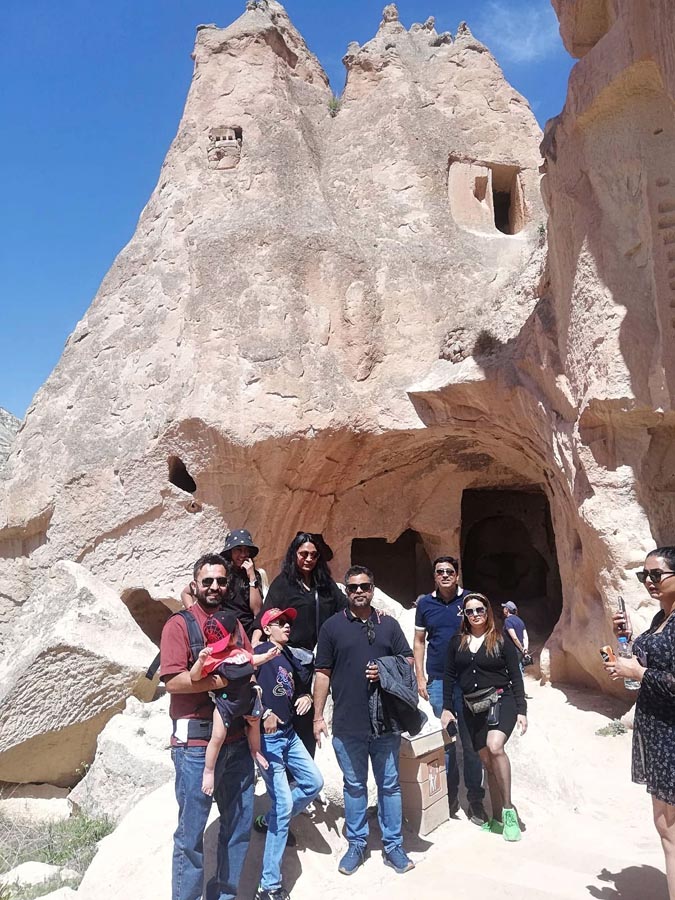
What makes Pasabag historically significant beyond its geology is the evidence of early Christian monasticism carved into the tallest pillars. Hermit monks climbed into chambers cut high above the ground, seeking the solitude prescribed by the Desert Fathers tradition. One multi-room complex inside a triple-capped chimney contains a small chapel with traces of painted crosses. The Cappadocia North Tour gives you time to walk the full circuit of the valley, entering the accessible cave rooms and examining the tool marks left by the monks who carved them with iron chisels over a millennium ago.
Avanos — Red Clay and the Art of the Wheel
Avanos owes its pottery tradition to geography. The Kızılırmak — the Red River — cuts through iron-rich sedimentary deposits on its way through town, delivering a fine red clay to its banks that potters have harvested since at least 2000 BCE. Hittite pottery fragments found in the surrounding hills confirm that the craft here predates the Roman Empire by over a thousand years.
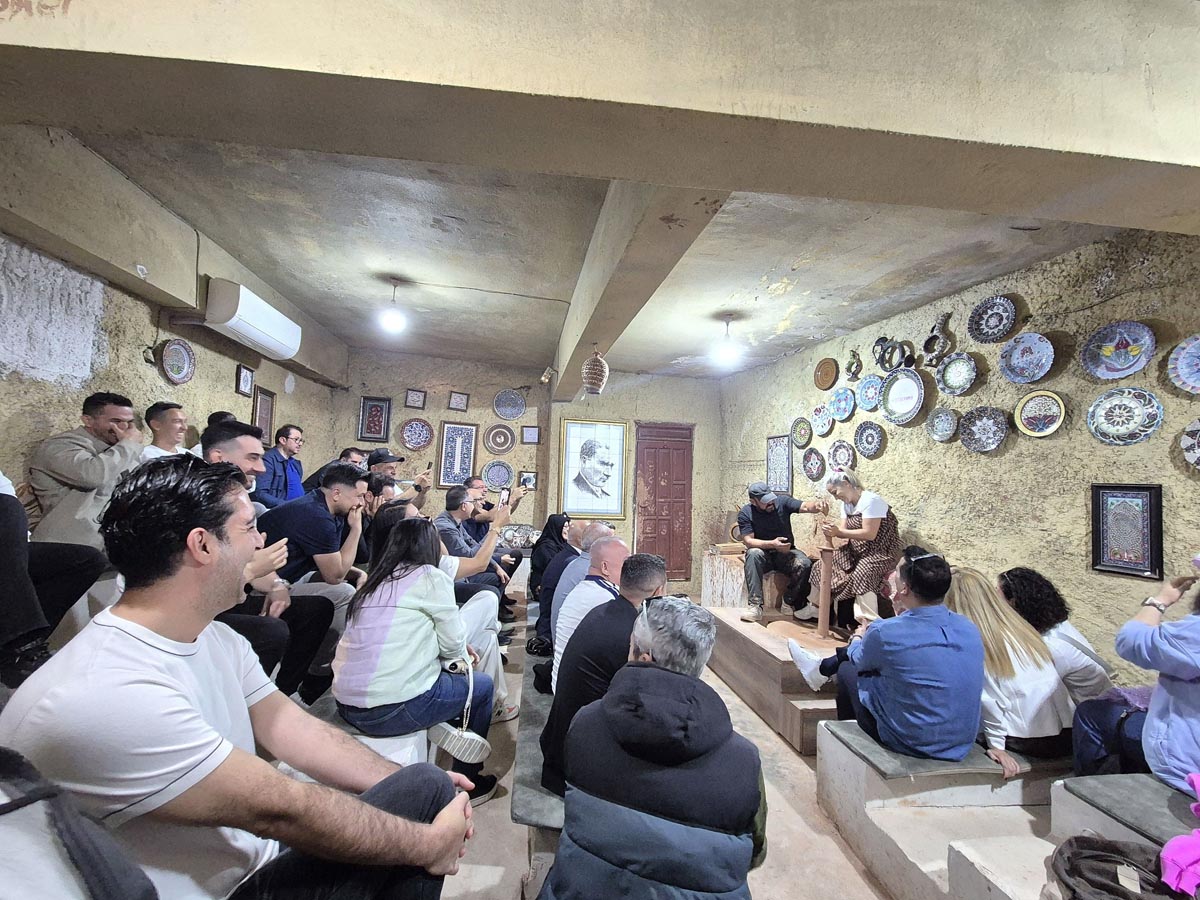
At the workshop, a third-generation potter demonstrates the full cycle of hand-thrown pottery. He kicks the heavy stone wheel into motion, centers a lump of wet clay, and within two minutes shapes a symmetrical vessel that he then trims, decorates, and sets aside for firing. The technique is identical to methods depicted on Hittite relief carvings — the same motion, the same tools, the same river clay. You are invited to take a seat at the wheel and try it yourself. The clay is cool, smooth, and surprisingly responsive even for complete beginners.
Göreme Open-Air Museum — A Mountain of Monasteries
The centerpiece of the Cappadocia North Tour is the Göreme Open-Air Museum, a monastic complex carved into a hillside that contains more than thirty churches, chapels, refectories, and living spaces dating from the 10th through 13th centuries. UNESCO inscribed this site on the World Heritage List in 1984, recognizing it as an exceptional example of Byzantine monastic architecture and religious art.
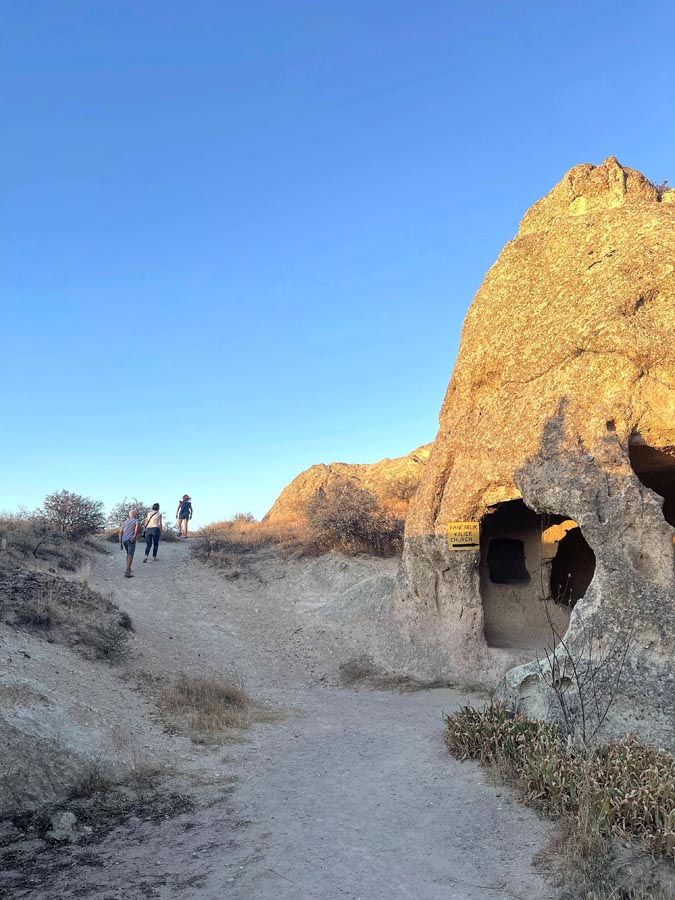
Your guide walks you through the complex chronologically, starting with simpler cave churches that feature painted red crosses on bare rock — the earliest decorative tradition, predating figurative art. Later churches show increasingly sophisticated fresco programs: narrative cycles from the life of Christ, portraits of saints, and decorative patterns drawn from both Byzantine and local Anatolian traditions. The pigments — iron oxide reds, copper-based greens, lapis-derived blues — were ground locally and applied to wet plaster pressed against the rock surface.
The Apple Church (Elmalı Kilise) offers the most accessible example of mature Cappadocian fresco work, with a complete dome composition showing Christ Pantocrator surrounded by apostles. The Snake Church (Yılanlı Kilise) contains the famous depiction of Saint George battling a serpentine dragon and a rare image of Saint Onuphrius. The Buckle Church (Tokalı Kilise), located just outside the main museum entrance, is the largest and most lavishly painted — its barrel-vaulted ceiling covered entirely in scenes painted against a deep blue background that remains striking after a thousand years of exposure.
For visitors willing to pay an additional entrance fee, the Dark Church (Karanlık Kilise) contains the finest surviving frescoes in Cappadocia. The church was buried and sealed for centuries, accidentally preserving its paintings in near-original condition.
Turkish Carpet Cooperative
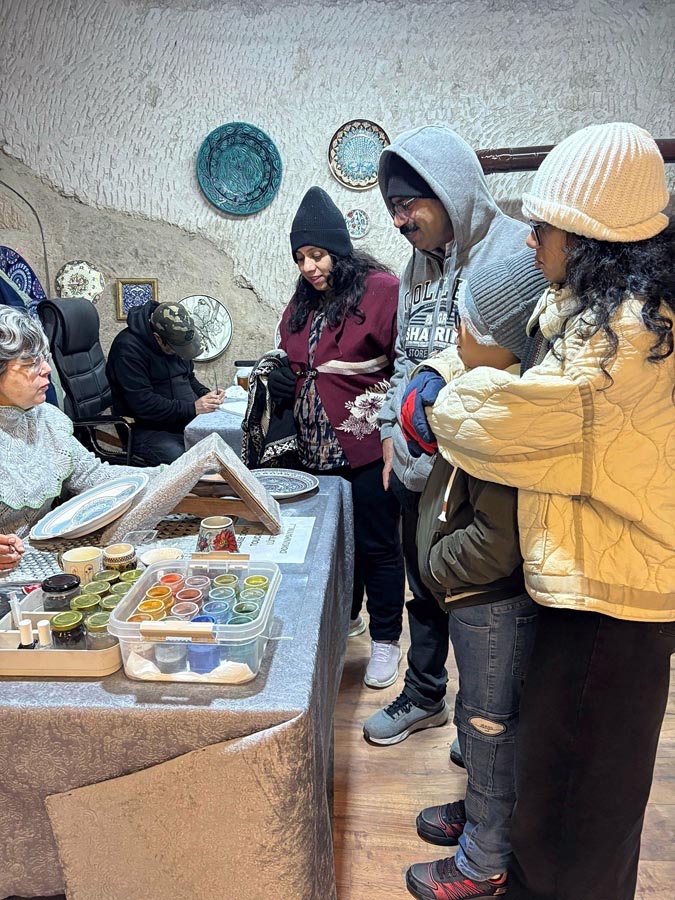
After Göreme, the tour visits a carpet cooperative where the art of hand-knotting is demonstrated from raw fiber to finished textile. Women from surrounding villages work at large looms, tying individual knots at a pace that can reach several hundred per hour — yet a single medium-sized carpet may require six months of daily work. Your guide explains the difference between the Turkish (Gördes) double knot and the Persian single knot, the significance of regional pattern variations, and how natural dyes produce colors that synthetic alternatives cannot replicate. Pomegranate rinds yield yellow, indigo plants produce blue, and crushed cochineal insects create the deep crimson that defines the most prized Anatolian rugs.
Browsing and purchasing are entirely optional. The value of this stop lies in understanding the labor and tradition embedded in each piece — knowledge that changes how you see Turkish carpets wherever you encounter them afterward.
Panoramic Viewpoint
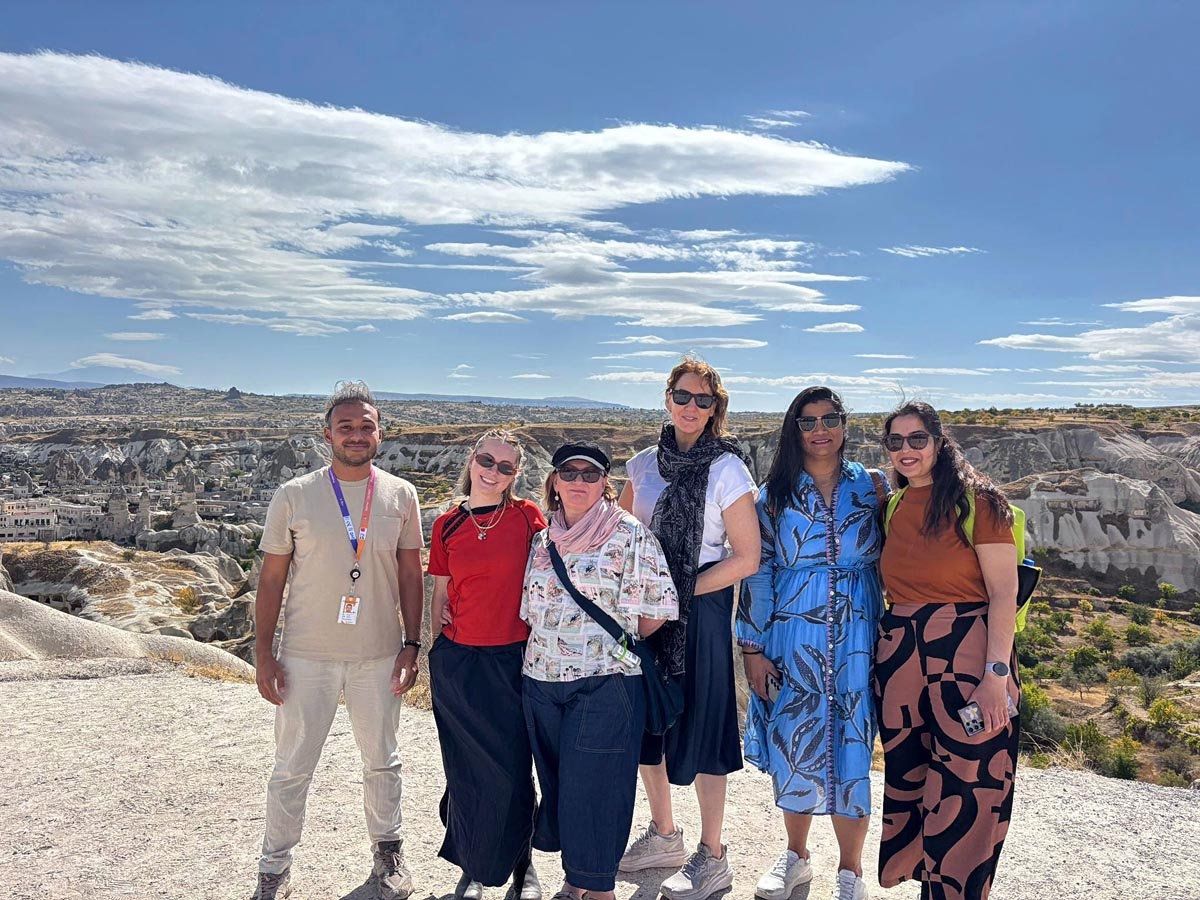
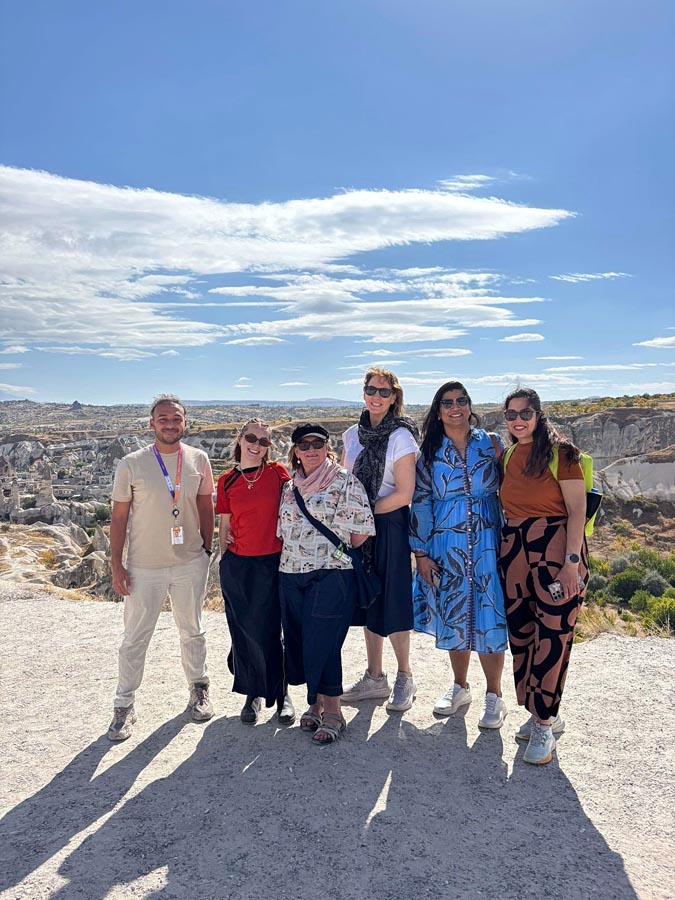
The final stop of the day is a panoramic viewpoint overlooking the pigeon valleys and fairy chimney forests of the northern Cappadocian plateau. In the late afternoon, the declining sun casts long shadows across the rock formations and turns the tuff from pale cream to deep amber. Your guide identifies the landmarks visible from this height — Uchisar Castle, the Göreme valley, the distant volcanic peaks — and explains how the geography you see from above connects to the sites you walked through at ground level during the day.
This is the contemplative end to a day of close-up encounters. After spending hours inside carved chambers and underground passages, the wide-open view provides a necessary shift in scale — a reminder that everything you explored today exists within a landscape that stretches to the horizon in every direction.
What Is Included
- Return hotel transfers within Cappadocia by minibus (Mercedes Sprinter / VW Crafter) — pickup approximately 09:00–10:00, exact time confirmed the day before
- Licensed English-speaking guide for the full day
- All museum and site entrance tickets
- Lunch at a traditional restaurant
What Is Not Included
- Dark Church entrance fee at Göreme Open-Air Museum
- Drinks during lunch and throughout the day
- Personal expenses and souvenirs
- Gratuities
What to Bring
- Passport or ID (required at some sites)
- Cash or card for personal shopping and drinks
- Water bottle
- Hat, sunglasses, and sunscreen in summer months
- Warm coat and layers in winter months
- Comfortable walking shoes — the Göreme museum and valley paths involve uneven ground
Why the North Tour Is Where Every Cappadocia Visit Should Begin
The northern circuit concentrates the sites that define Cappadocia in the global imagination — the fairy chimneys, the frescoed cave churches, the volcanic panoramas. The Cappadocia North Tour puts these icons in context with expert commentary that connects geology to history to living tradition. You leave understanding not just what Cappadocia looks like, but how it formed, who lived here, and why they chose stone over wood and earth.
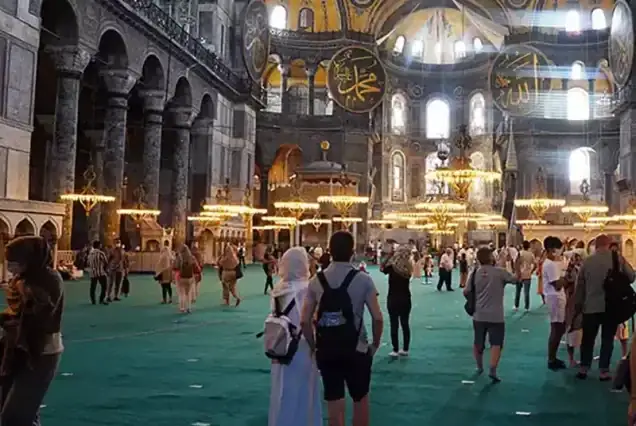
For visitors continuing to Istanbul, the historical threads picked up in Cappadocia weave directly into the capital’s monuments. The Istanbul Old City Tour takes you inside the Hagia Sophia — the church that influenced the fresco programs you see at Göreme — and through the Grand Bazaar, where Cappadocian pottery and carpets have been traded for centuries. The Istanbul Food Tour explores the culinary traditions of a city that served as the market for Cappadocia’s agricultural output throughout the Ottoman period.
Related Tours
- Istanbul Old City Tour — Hagia Sophia, Blue Mosque, Grand Bazaar, and Hippodrome in one full day
- Istanbul Food Tour — Street food, spice markets, and local culinary traditions across the old city
- Istanbul Islamic Tour — The great mosques of Istanbul from early Ottoman to the classical age of Sinan
- Cappadocia Red Tour — Devrent, Pasabag, Avanos, Zelve, Göreme, and carpet workshops
- Cappadocia Green Tour — Derinkuyu Underground City, Ihlara Valley hike, and Selime Monastery
Book Your Cappadocia North Tour with Istanbul Daily Cruises
The North Tour departs every morning year-round, with pickup from hotels across all Cappadocia areas between approximately 09:00 and 10:00 by minibus (Mercedes Sprinter / VW Crafter). The exact pickup time is confirmed the day before based on your hotel location and the day’s route. Small group sizes ensure meaningful access to every site, from the intimate interiors of Göreme’s painted churches to the hands-on experience at the Avanos pottery wheel. Istanbul Daily Cruises works exclusively with licensed local guides who bring deep regional knowledge to every stop. Choose your date above and reserve your place — the landscape that launched a thousand postcards is waiting to be walked.




Reviews
There are no reviews yet.